They call. They text. They knock.
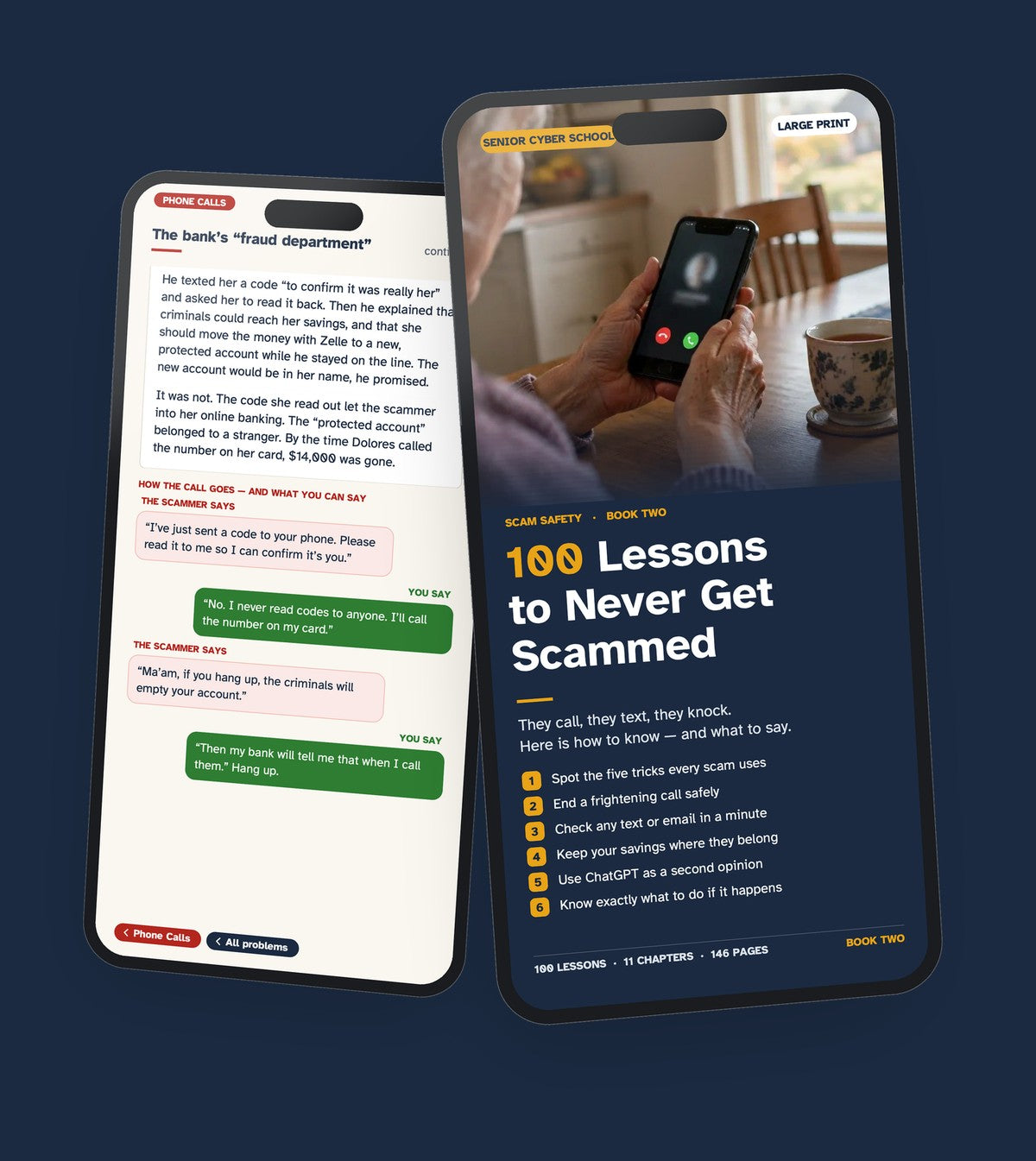
This book shows you how to tell when it's a scam — and gives you the exact words to say.
100 short lessons. Sent to your email right away.
Would you get these right?
Three everyday situations. Harder than they look. Tap your answer: nothing to type, nothing to send.
Your bank texts you: “Did you try to send $980 to J. Miller? Reply YES or NO.” You did not send it. What do you do?
Don't reply.
Real banks do send texts like this. That is exactly why it works.
What happens after a NO, and the safe move: Lesson 25
Get the answer — $39A text from a number you don't know: “Hi Susan, are we still on for lunch on Friday?” You are not Susan, so you kindly say so. They apologize, say you seem lovely, and ask where you are from.
Almost always a scam.
No link, no money, no request. Not yet.
How a polite reply turns into money: Lesson 60
Get the answer — $39A paper letter from your county court says you have been picked for jury duty. It asks you to fill in a form and mail it back. No money, no phone number to call.
Probably real.
Courts really do send jury notices by mail. The scam is the phone call that says you missed it.
What that call sounds like, and what to say: Lesson 15
Get the answer — $39The old advice — look for bad spelling — no longer works. Scammers now write perfect English, and they can copy a voice. The book names the five tricks every scam uses (Lesson 2). Once you know them, you hear them.
It never looks like a scam.
It looks like your bank. Your grandson. A delivery. A friend.
 A call from your bank's “fraud department.” They want to move your money somewhere safe.Answer: Lesson 13
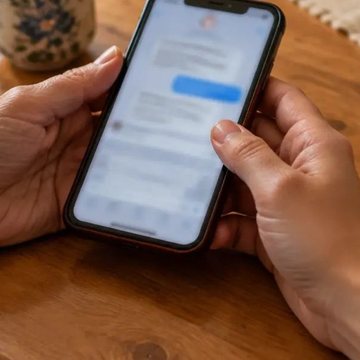 A text about a package, a toll or a refund, with a link to tap.Answers: Lessons 21–24
 A red warning on your computer that will not close, and a number to call.Answers: Lessons 37–38
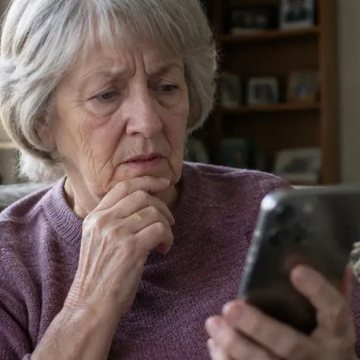 A kind new friend online who, one day, needs money.Answers: Lessons 57–58
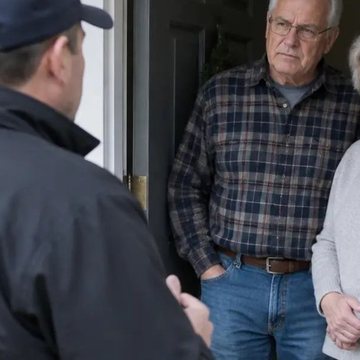 A knock at the door: a roofer, a utility worker, a charity.Answers: Lessons 75–79
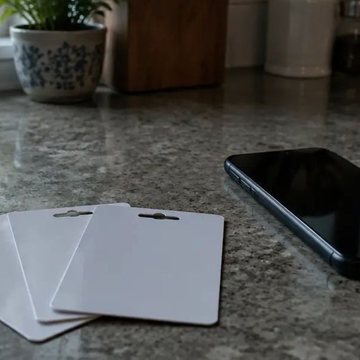 Someone who wants to be paid in gift cards, gold or Bitcoin.Answers: Lessons 66–71
There is a lesson for each one — 100 in all — and a whole chapter on what to do if it already happened.
Being fooled is not being foolish. These are professionals.
It gives you the words.
Most advice just says “be careful.” This book tells you exactly what to say — word for word.
A call about your bank
Then you hang up. You are allowed to.
A call from “your grandson”
It is one simple question. Your real grandson knows the answer. A scammer changes the subject, gets upset, or hangs up.
Lessons 13, 15 and 66 do the same for the bank's “fraud team,” a missed jury duty and a demand for gift cards: what they say, what you say, and when to hang up. Plus one polite sentence that ends any call, from anyone (Lesson 3).
Know the question before the phone rings.
Something feels wrong? Open the book.
- Find what happened in the list at the front — a call, a text, an email, a knock.
- See what gives it away. Every chapter shows the warning signs.
- Follow the steps. Numbered, one at a time, in plain English.
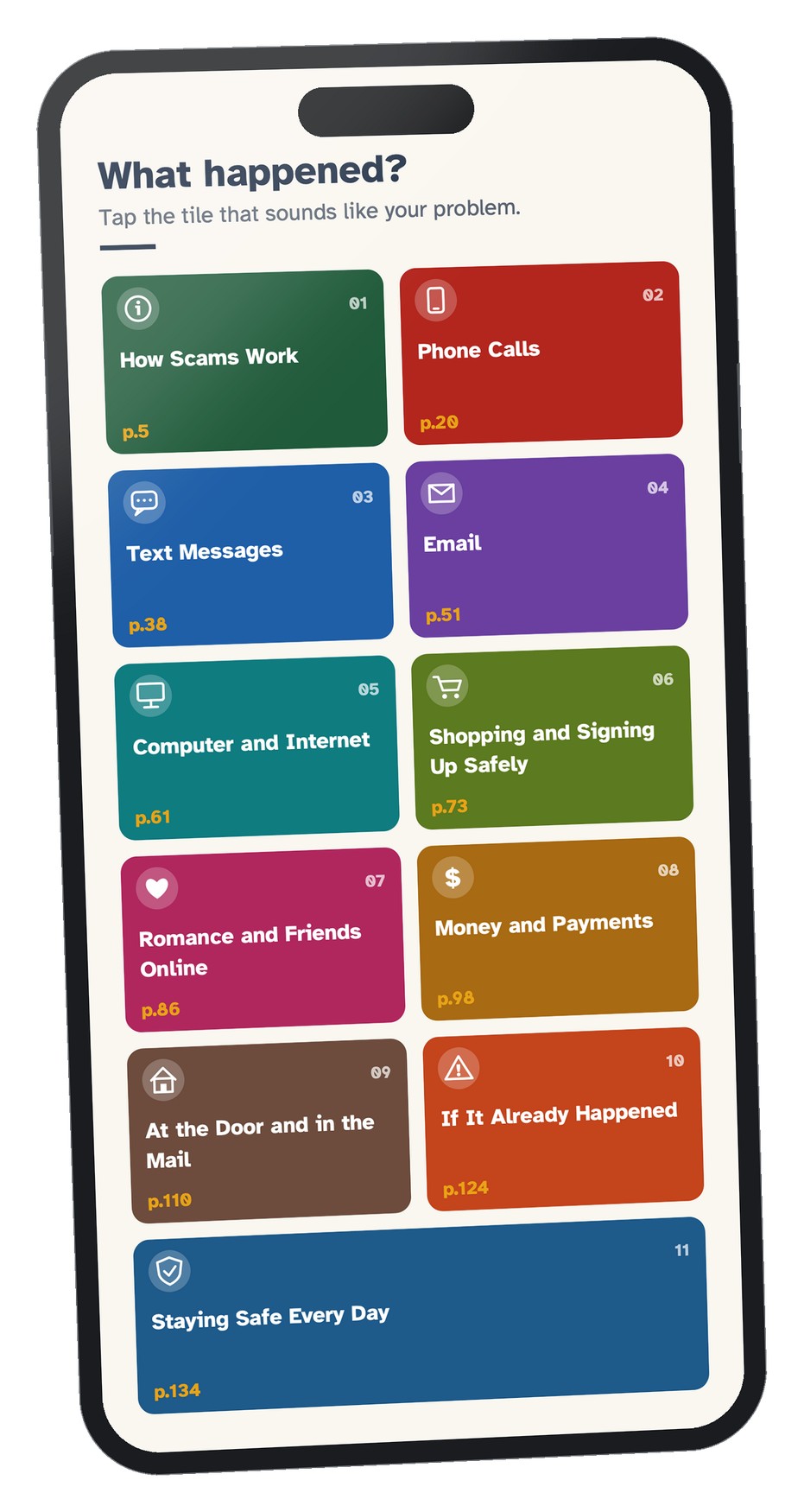
Start with chapter one. It is short, and it is the key to all the others.
Some of what you will find out:
Each answer is in the book. The lesson number is next to it.
The one question that tells your real grandson from a copied voice.
Lesson 11Eight things a real bank or government office will never ask you to do. Hear one, and you can hang up.
Lesson 4Why a caller who knows your name, your address and your family's names proves nothing.
Lesson 4The phone setting that stops most scam calls from ever ringing.
Lesson 94The free step that stops strangers opening loans or cards in your name.
Lesson 93Why you should never reply STOP to a strange text.
Lesson 24The “second scam” that comes after the first, and how to see it coming.
Lesson 89The one rule. If you remember one thing from the whole book, make it this.
Lesson 3
A card for beside your telephone.
Six yes-or-no questions to ask before you pay, send or say anything. Print it, write in your one person and your bank's number, and keep it by the phone.
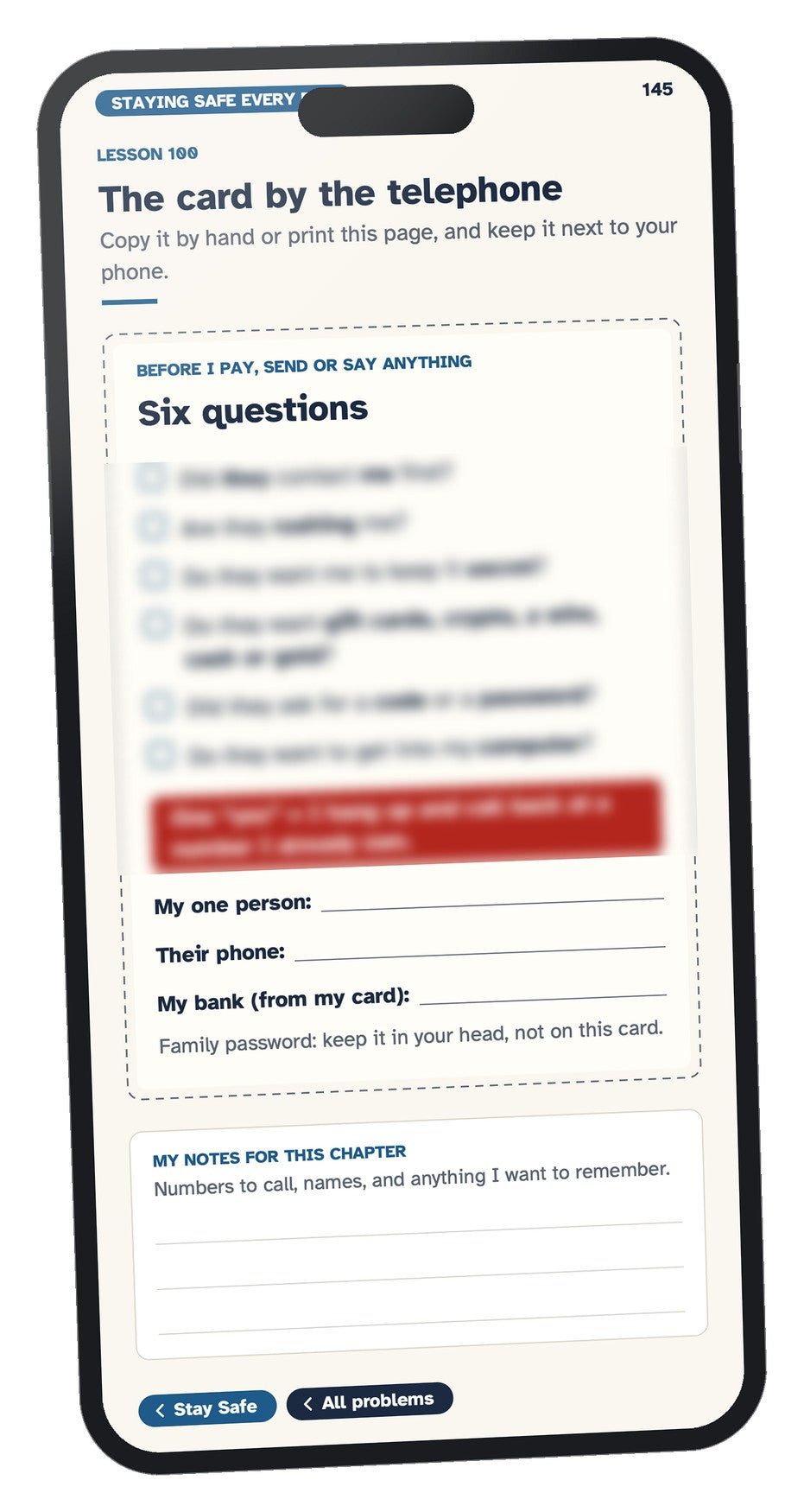
Plus a five-day plan: one small thing a day, while nothing is wrong (Lesson 92).
What you get.
A small price next to what one phone call can take.

100 Lessons to Never Get Scammed
Large print · 146 pages · 100 lessons
$39once
- All 100 lessons in one large-print book.
- The exact words to say when a scammer calls.
- Every answer locked on this page, and many more.
- What to do in the first hour, if it already happened.
- The card by the telephone, ready to print.
- Opens on iPhone, Android, a tablet or a computer.
Arrives by email right away.
- Safe, secure checkout
- Card or PayPal
- Arrives by email right away
- Yours to keep forever
When you tap the button.
- A secure payment page opens. Type your email, then pay by card or PayPal. It takes a minute or two.
- The book is sent to your email right away. Tap the button in the email and it opens on your phone.
- Keep it forever. Nothing renews and nothing expires. The button in the email keeps working.
Arrives by email right away.
- Senior Cyber School is a small private company. Not the government, not a bank, not Medicare.
- A real person answers every email within 6 hours, Monday to Friday. Before you buy, too.
- We will never phone you, and never ask you for a password or a code.
- No countdown and no “today only.” Honest offers don't need one. Take your time.
Forward the email. The button works for them too.
Then sit down together for chapter one, and agree on a family password.
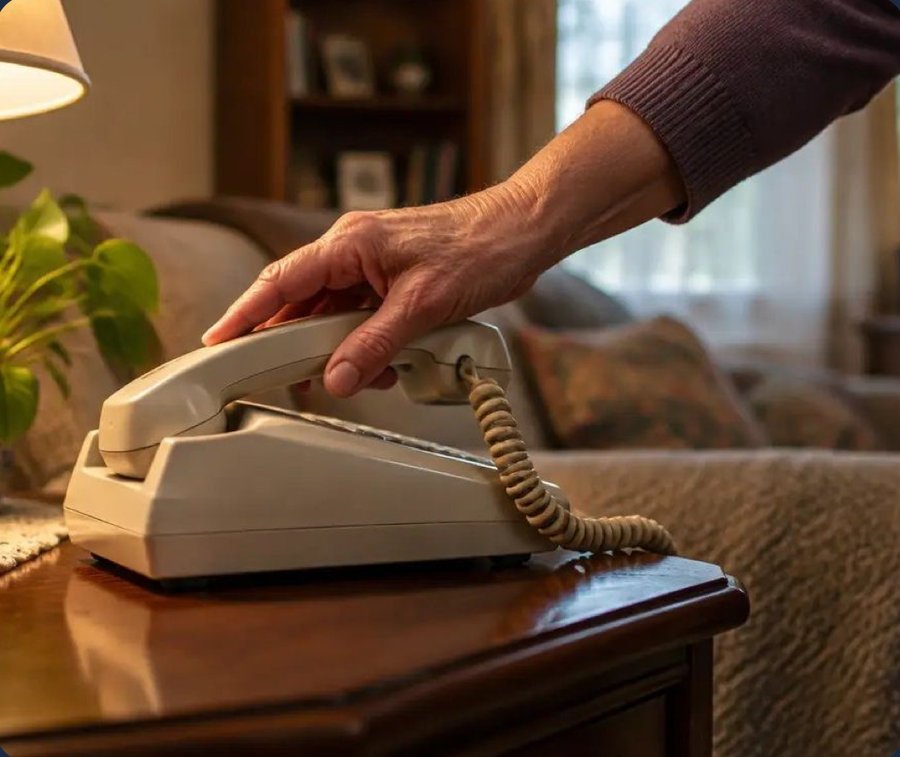
Real callers can wait. Scammers can't.
Keep the book by the telephone. When something feels wrong, open it.
Questions first? They are just below.
- Safe, secure checkout
- Card or PayPal
- Arrives by email right away
- Yours to keep forever
Tap a question to see the answer.
Do I need to be good with phones or computers?
No. If you can open an email, you can open this book. Every lesson is short, in plain English, one step at a time.
How will I get the book?
It is sent to your email right away, the moment you pay. Open the email, tap the button, and the book opens. Keep the email: the button keeps working.
Is it really large print?
Yes. On a phone you can also spread two fingers to make any page bigger. You can print it, too.
Will it work on my phone?
Yes: iPhone, Android, a tablet or a computer. Nothing to install. It opens from the email.
Is it a subscription?
No. $39 once. Nothing renews. The book is yours to keep.
How do I know this website is safe?
Good question. It is exactly what the book teaches you to ask. You pay once, on a secure payment page, by card or PayPal, and we never see your full card number. We will never phone you or ask for a password or a code. And a real person answers every email within 6 hours, Monday to Friday.
Can I buy it for someone else?
Yes. Buy it with your own email and forward the email to them. The button in it works for them too.
What is ChatGPT? Do I need it?
No, you do not need it. ChatGPT is a free app that answers questions. Some chapters show one sentence you can type into it to double-check a message. If you do not use it, skip those parts. Every lesson works without it.
Is this the same as your first book?
No. This is a new book: 100 short lessons on scams by phone, text, email, the internet, the door and the mail. You do not need the first one.
What if I get stuck?
Write to info@seniorcyberschool.com. A real person answers within 6 hours, Monday to Friday.
The email has not come.
It is sent the moment you pay. Not there after a few minutes? Look in Junk or Spam. Still nothing? Write to info@seniorcyberschool.com and a real person will send it again.